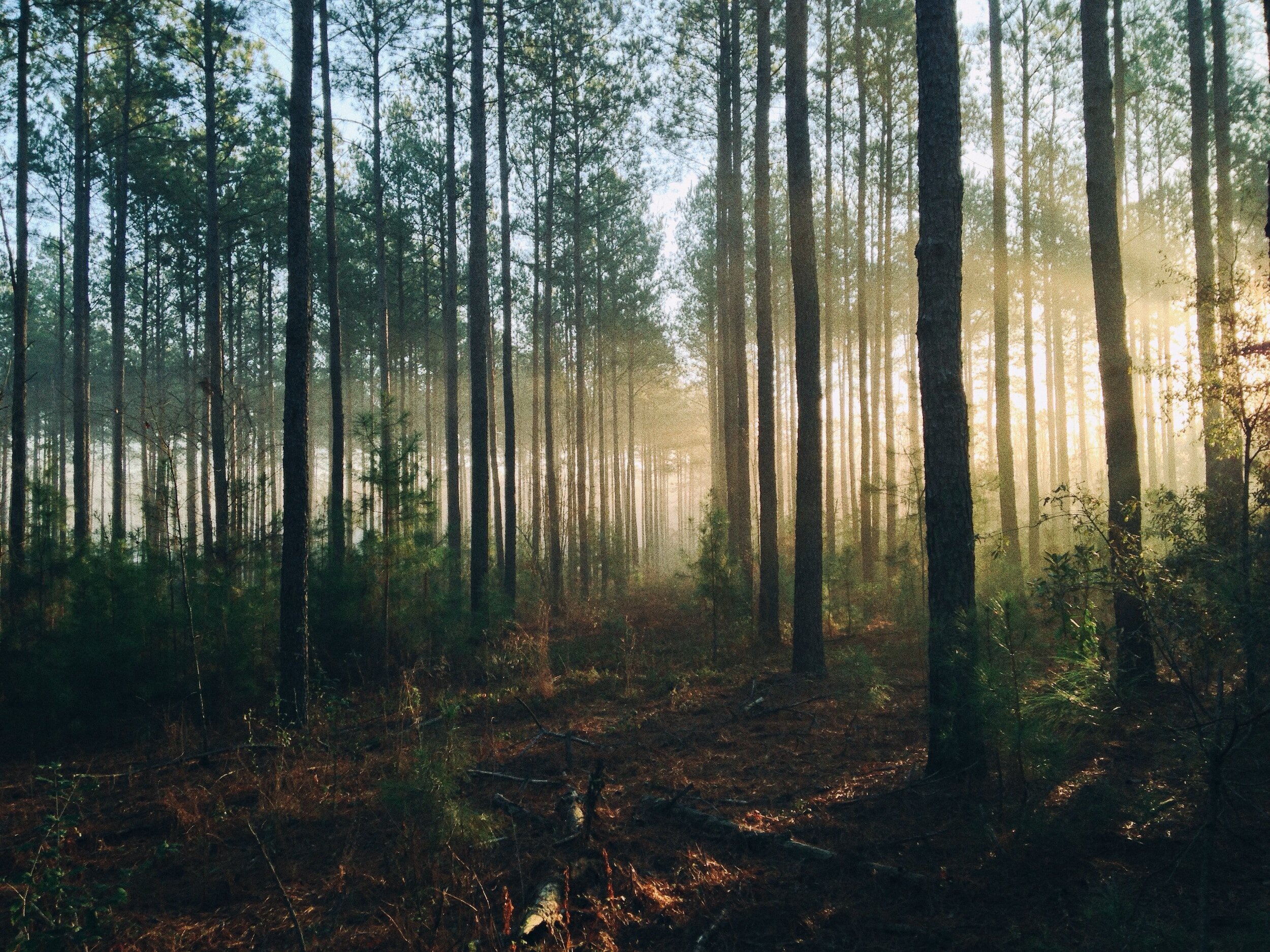
Indigenous-Led Conservation 2024
April 16, 2024 at 9:00AM PST
Downtown Vancouver and Live Webinar
Indigenous-Led Conservation 2024
April 16, 2024
Overview
First Nations, Inuit and Métis have been at the forefront of protecting the largest and most biodiverse areas since time immemorial, including in the place that is now known as Canada. Indigenous approaches to conservation have been proven to be effective and successful; however, it is only in recent years that there is a paradigm shift towards recognition of Indigenous People’s deep knowledge and understanding of land management and preservation, and increased Indigenous leadership in conservation on a national scale.
This conference will bring together an esteemed panel of experts to explore the philosophical roots, legal foundations, and the practical implications of Indigenous-led conservation efforts. This program will also reflect on the Traditional Knowledge, wisdom and vision of communities, and why they are the keys to climate justice, addressing climate change and biodiversity loss. Explore a future where Indigenous-led conservation efforts create innovative pathways to community wellbeing, strong cultures, and healthy ecosystems. Delve into the practical implications of this paradigm shift and gain an understanding of how Indigenous knowledge mobilization will drive sustainable change, and advance reconciliation and Indigenous self-determination.
Key Areas Addressed:
What is “Indigenous-led Conservation”?
The legal foundations of nature conservation
How Tribal Parks, Indigenous Protected and Conserved Areas, and Federal and Provincial Protected Areas are different – and why this distinction matters
How Indigenous-led stewardship and conservation efforts advance reconciliation
Coordination and cooperation amongst all levels of government, including the landmark Tripartite Framework Agreement on Nature Conservation
Who Should Attend:
Aboriginal, Métis, and First Nations leaders, officials, councillors, Elders, negotiators, administrators, and advisors
Lawyers practicing in the areas of Aboriginal law, Indigenous law, environmental law, and human rights
Federal, provincial and municipal government officials and policy advisors
Professionals working in the area of Indigenous Relations
Negotiators and mediators for industry, government and Indigenous communities
Agenda
9:00 - Welcome by PBLI
9:05 - Territorial Welcome
Deanna Lewis
SKwxwú7mesh (Squamish Nation)
9:10 - Chair’s Welcome and Introduction
Eli Enns
Founder & CEO, IISAAK Olam Foundation
Part I: Exploring the Philosophical and Legal Roots of Indigenous-Led Conservation
9:15 - Legal Pluralism Part I: Understanding Legal Pluralism and the Sources of Rights
Dr. Alan Hanna
Assistant Professor, Faculty of Law, University of Victoria
Dr. Darcy Lindberg
Assistant Professor, Faculty of Law, University of Victoria
Multitude of legal traditions in Canada:
Indigenous Law
Natural Law
The Constitution Act, provincial and federal legislation and common law
Balancing and navigating cultural differences in legal articulations
9:45 - Questions and Discussion
10:00 - Morning Adjournment
10:15 - Legal Pluralism Part II: Applying Legal Pluralism to Nature Conservation in Canada
Deborah L. Curran
Professor, Faculty of Law and Executive Director, Environmental Law Centre at University of Victoria
Dr. Alan Hanna
Assistant Professor, Faculty of Law, University of Victoria
Dr. Darcy Lindberg
Assistant Professor, Faculty of Law, University of Victoria
What Indigenous laws and legal traditions say about conservation efforts and environmental sustainability
Reflecting on the encounter between Western Colonial Law and Indigenous Law on issues of stewardship over the natural world
How a trans-systemic contract law perspective recognizes relationships and obligations between human and non-human natural entities
Ecological governance through Indigenous legal orders
Corporate separateness vs. relational ethos: applying Indigenous legal traditions that govern relations to corporations and corporate social responsibility
11:00 - Questions and Discussion
11:15 - Legal Pluralism Part III: Presenting the UVic Environmental Law Centre’s Research Report on Canadian Legal Expressions of IPCA
Deborah L. Curran
Professor, Faculty of Law and Executive Director, Environmental Law Centre at University of Victoria
University of Victoria Environmental Law Centre’s new report on Canadian legal expressions of IPCAs
11:45 - Questions and Discussion
12:00 - Lunch Adjournment
Part II: Knowledge Mobilization and The Practical Implications of The Paradigm Shift in Conservation
1:00 - Understanding the Tripartite Framework Agreement on Nature Conservation between Canada, BC, and the First Nations Leadership Council
Lori Halls
Deputy Minister, Ministry of Water, Land and Resource Stewardship
Grand Chief Stewart Phillip
President, Union of BC Indian Chiefs
Moderated by Jessica Clogg, Executive Director of West Coast Environmental Law
Government-to-government relationships in conservation and land use planning
What this agreement means for First Nations communities and conservation efforts
Key goals, opportunities, and challenges ahead
Facilitating meaningful and productive dialogue between Indigenous and Western legal traditions
1:45 - Questions and Discussion
2:00 - Afternoon Adjournment
2:15 - First Nations Reclaiming What is Theirs: IPCA Case Studies
Stephanie Thorassie
Executive Director of Seal River Watershed Alliance
Steven Nitah
Managing Director - Canada, Nature for Justice
Historical and political contexts leading to the establishment of the Thaidene Nëné and Seal River Watershed IPCAs
Invoking inherent rights and title, jurisdiction and decision-making authority
Confirming management and stewardship responsibilities and rights
IPCA vision and community goals
Governance and funding
Status of pre-existing provincial and federal crown tenures and land-use designations
Lessons learned from working with neighbouring Indigenous nations, Crown governments, and other stakeholders
Looking ahead and next steps
3:00 - Questions and Discussion
3:15 - What’s in a Name? Distinguishing Between Tribal Parks, IPCAs, and Provincial and Federal Protected Areas
Terry Dorward
President of the Board of IISAAK Olam Foundation
Eli Enns
Founder & CEO, IISAAK Olam Foundation
Premiere of "NaaWas Rises” (4 minute video)
The interconnectedness of Indigenous cultures with the natural environment
The legal roots of Indigenous-led conservation
Natural laws
Indigenous laws
Section 35 of the Constitution Act, 1982
UNDRIP
Why it matters to distinguish amongst tribal parks, Indigenous Protected and Conserved Areas, and federal and provincial protected areas
Celebrating the 40th Anniversary of the Declaration of Meares Island Tribal Park (Wanachus Hilth-hoo-is)
4:00 - Questions and Discussion
4:15 - Chair’s Closing Remarks
4:20 - Program Concludes
Evening reception hosted by IISAAK Olam Foundation to celebrate the
40th Anniversary of the Meares Island Tribal Park. Tickets Available Here!
Meet the Chair

-
Founder & CEO, IISAAK Olam Foundation
Eli Enns is the great grandson of Na'waas'um (historian and public speaker for Wickanninish) from Tla-o-qui-aht on his father's side. On his mother's side, Eli is a 2nd generation immigrant from the Netherlands, grandson of Peter Enns (Dutch Mennonite). Eli is a happy father and a grateful grandfather. Eli is also an internationally recognized expert in bio-cultural heritage conservation and Indigenous economic development. He is a nation builder and Canadian political scientist focused in constitutional law, geopolitics and ecological governance. Eli has recently started a two year term as president and chair for the Canadian Committee for IUCN. He has contributed to the Ha’uukmin Tribal Park in the Clayoquot Sound UNESCO Biosphere Reserve on Vancouver Island, Eli was Co-Chair for The Indigenous Circle of Experts for The Pathway to Canada Target 1 (Aichi Target 11). He is CEO and President of the IISAAK OLAM Foundation and Founder of the Naa’Waya’Sum Gardens in Tofino, Clayoquot Sound.
Meet the Faculty

-
Executive Director & Senior Counsel, West Coast Environmental Law, Vancouver, BC
Jessica Clogg is the Executive Director & Senior Counsel of the non-profit law organization, West Coast Environmental Law, where she has worked as an environmental and Indigenous rights lawyer for the past 25 years. Through West Coast’s Revitalizing Indigenous Law for Land, Air and Water or RELAW program, Jessica provides legal and strategic support to First Nations who are implementing strategies grounded in their own laws to protect and defend their territories, and to transform Canadian law. A settler raised in Stó:lō country in the lower Fraser Valley, she holds a joint Masters in Environmental Studies and law degree from Osgoode Hall, York University, and an Ashoka fellowship recognizing her work bridging between Canadian and Indigenous legal traditions.

-
Professor, Faculty of Law and Executive Director, Environmental Law Centre at University of Victoria
Both in research and practice I am engaged in the subjects of water and regional or watershed sustainability. Flowing through all of my research is an interest in how legal and policy structures (1) facilitate or impede us from adapting to changing ecological conditions, and (2) shape decision-making through governance processes. It is adaptive governance that assists us to respond to socioecological conditions, and law – indigenous, customary community, municipal, provincial and federal - plays a foundational role in how well any watershed community responds over time or to specific events.
I am privileged to be associated with both the Faculty of Law and School of Environmental Studies (Faculty of Social Sciences) at the University of Victoria. I teach in the areas of land and water regulation and law, including water law, municipal law, and the Environmental Law Clinic – Intensive course. I also facilitated a unique field course in environmental law in the Central Coast at the Hakai Institute on Calvert Island from 2011-2015, and am committed to field course-based learning. As the Executive Director with the Environmental Law Centre at UVic, I supervise students working on environmental law projects for community organization and First Nation clients (see www.elc.law.uvic.ca). My work as a municipal and environmental lawyer influences my teaching and I typically expect students to complete course work – legal memos or research papers – on topics that are currently relevant for municipal, First Nation or community organization staff. All of my courses explore how colonial law interacts with or has an impact on indigenous laws and communities.

-
President of the Board of IISAAK Olam Foundation
Terry is a member of the TLA-O-QUI-AHT FIRST NATIONS from the House of Hi-you-eah which is represented by the SEITCHER family. In 2003, when he got married to Bev Dorward (Cree/Lakota) he was given the Nuu-chah-Nulth name “Seit-Cha” (One who swims around in the water).
Terry grew up in Port Alberni and was raised by his great-grandmother, Susan Marshall from Xwisten (Bridge river) of the St`at’imc nation. At an early age of 12, Terry participated in the 1984 marches and blockades that declared Wah-Nah-Jus/Hilth-Hoo-is (Meares Island) a Tribal Park. It was this profound experience that had politicized Terry to have an awareness of the struggles to uphold and protect Indigenous title and rights. Terry was an active member of various Indigenous direct action groups in the 1990s and 2000s that supported the removal of open net fish farms in Kwakwaka’wakw territories, as well defending west coast and east coast fishing rights in Esgenoopetitj and Cheam First Nations.
In 2005, Terry graduated from Malaspina University with a Bachelors of Arts with a focus on colonization/decolonization under Professor Umeek Atleo, First Nations Arts 1 program. From 2010-2016, 2018-2022, Terry was an elected councillor for Tla-o-qui-aht First Nations and represented his nation at the Union of BC Indian Chiefs. Today, Terry continues to participate in Tla-o-qui-aht Hereditary chiefs meetings to support his brother Ray Seitcher who is the Tyee Hawilth (Head chief) of Tla-o-qui-aht. From Nov 2007 to Jan 2023, Terry was the Tla-o-qui-aht Tribal Parks Project coordinator that helped deliver cultural, educational, stewardship, and economic projects in the rainforest. Terry was one of the co-founders of the Tla-o-qui-aht Tribal Parks Guardian program that continues to monitor and enforce Tla-o-qui-aht traditional laws within the region. Tla-o-qui-aht Tribal Parks continues to be upheld nationally and internationally as a successful, ongoing developing IPCA.

-
Deputy Minister, Ministry of Water, Land and Resource Stewardship
Lori was appointed Deputy Minister for the Ministry of Water, Land and Resource Stewardship on February 25, 2022. Following an organizational effectiveness review which she lead and assisted government to determine whether land use objectives that support economic activity, environmental sustainability and reconciliation with Indigenous peoples can be more effectively achieved through ministry restructuring.
As Deputy Minister of Emergency Management BC she co-chaired the Deputy Ministers’ Committee on COVID-19 helping to facilitate an all of government approach to the response and recovery during the longest Provincial State of Emergency. She was also Deputy Minister of the BC Public Service Agency where she championed corporate succession management efforts, implemented changes to compensation and benefits and implemented effective changes to ethics management in the Public Service.
She has been with the BC Public Service for over 30 years. Her career began in government as a coop student in Victoria in 1993 and held many progressively responsible positions within the Ministry of Health. Lori has also held several roles at the Assistant Deputy Minister level with both the Ministry of Environment and the BC Public Service Agency.
Lori has a Bachelor of Arts in Political Science and History and a Master of Public Administration from the University of Victoria.
-
Assistant Professor, Faculty of Law, University of Victoria, Victoria, BC
I was appointed to the Faculty of Law in 2019 as an assistant professor. My teaching and research interests include Indigenous laws and jurisdiction, governance, rights and title, and environmental sustainability under Indigenous legal traditions, Aboriginal law and jurisprudence, and the many intersections of these disparate systems. My primary research interest is how agreements and resulting obligations arise in different Indigenous legal orders, as a means of thinking about alternate conceptions of contracting with others. I teach Transsystemic Contracts in the JD/JID program, where students explore various examples of agreements, promises, and obligations from diverse Indigenous legal perspectives in conversation with contract law concepts and principles. Additionally, I teach the Law 350I: Field Course in the JD/JID program, and Indigenous legal research methodologies. I have also taught Aboriginal Lands, Rights, and Governance.
I previously practiced Aboriginal law at Woodward & Company Lawyers LLP in Victoria. A person of mixed Blackfoot, French, and Scottish ancestry, I am connected to the Northern Secwepemc community of T’exelc through marriage. My PhD work involved analyses of Tsilhqot’in traditional laws applied to the access and use of surface water to provide a framework for informing contemporary Tsilhqot’in watershed governance.

-
SKwxwú7mesh (Squamish Nation)
-
Assistant Professor, Faculty of Law, University of Victoria, Victoria, BC
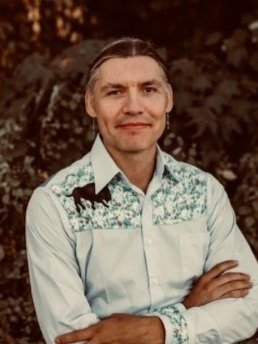
Darcy Lindberg is mixed-rooted Plains Cree, with his family coming from maskwâcîs (Samson Cree Nation) in Alberta and the Battleford-area in Saskatchewan. He holds a BA from the University of Alberta, and a JD, LLM and PhD from UVic. He has taught courses at the University of Alberta on constitutional law, Indigenous legal traditions, treaties, and Indigenous environmental legal orders.
Darcy was called to the British Columbia and Yukon bars in 2014, and practiced in the Yukon Territory with Davis LLP. His research focuses on nêhiyaw law, ecological governance through Indigenous legal orders, gender and Indigenous ceremonies, comparative approaches in nêhiyaw and Canadian constitutionalism, and Indigenous treaty making. In 2021-22, he will be teaching one of the field schools in the JD/JID program.

-
Managing Director – Canada, Nature for Justice, Lutselk’e, Northwest Territories, Canada
Since 2022, Steven has held the position as Managing Director, Canada for Nature for Justice, a social justice NGO supporting communities on the frontlines of climate change. He is also a member of the leadership circle of the Conservation the Reconciliation Partnership supporting Indigenous Governments that are creating IPCAs in their territories. Steven also leads the Restore Assert Defend network created to support Indigenous Governments’ ability to participate in the NBCS markets via their IPCAs, and to support their ongoing management and operations of their IPCA.
Steven was a negotiator for Lutsel K’e Dene First Nations and advisor with the Indigenous Leadership Initiative. A former MLA elected to the Northwest Territories Legislative Assembly, Steven was also elected Chief of Lutsel K’e Dene First Nations (LKDFN) in 2008 and served as CEO for the Denesoline Corporation, the economic development arm of LKDFN.
Steven has been the lead negotiator on behalf of LKDFN with the Government of Canada for the creation of a protected area in Thaidene Nene, with shared jurisdiction between Crown and First Nations government. He continues to play a primary role in engaging with various levels of government and industry to build support and validation for the Thaidene Nene vision.
-
President, Union of BC Indian Chiefs
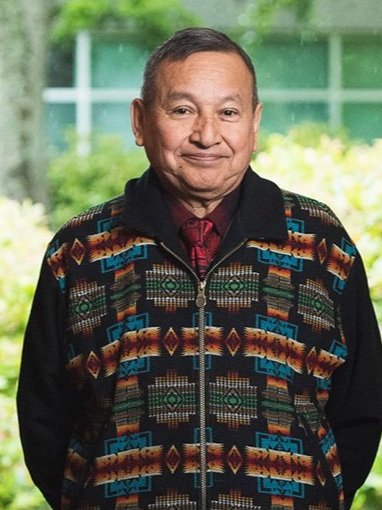
On September 14, 2022, Grand Chief Stewart Phillip, Sylix Nation, was re-elected by acclamation to his ninth consecutive three-year term as President of the Union of BC Indian Chiefs (UBCIC), a position he has served for the past 26 years.
Prior to his tenure as President of UBCIC, he served his community as Chief of the Penticton Indian Band (PIB) for 16 years, in addition to previously serving as an elected Band Councillor for a 10-year period. He has also worked within PIB Administration in various capacities such as Band Administrator, Education Counselor, Director of Land Management and more. Aside from his 26-year tenure as an elected leader of PIB, he also served as Chair of the Okanagan Nation Alliance for 16 years.
In October 2006, the Okanagan Nation, led by the Elders of the Penticton Indian Band, bestowed on him and his family the rare title of Grand Chief in acknowledgement of his lifetime commitment to advancing Okanagan Title and Rights and the Title and Rights of all First Nations.
Grand Chief Stewart Phillip's activism to First Nations Title and Rights across Turtle Island has been acknowledged through various awards and honors, including the BC Reconciliation Award in 2021 and the Eugene Rogers Environmental Award in 2017 (awarded jointly with Joan Phillip) for his decades-long commitment to protecting the lands, waters, and environment. Additionally, in November 2018, he received an honorary Doctor of Laws, honoris causa, from the University of British Columbia for his lifelong advocacy. His work has extended to shaping and advancing landmark legislation and policies, such as advancing the Tsawwassen Accord to unite BC First Nations leadership, the passing of the Bill 41 into the Declaration on the Rights of Indigenous Peoples Act and his involvement in founding the Indigenous Youth Internship Program (IYIP) in partnership with the BC government.
Grand Chief Stewart Phillip has been married for 46 years to his wife Joan Phillip, who is currently serving as a Member of the Legislative Assembly of BC for the riding of Vancouver-Mount Pleasant. They have three sons (one deceased), two daughters, six granddaughters and nine grandsons. He has been enjoying sobriety for 37 years while splitting his time between Penticton and East Vancouver.
Grand Chief Stewart Phillip has long since committed to strengthening and protecting the interests, title and rights of First Nations people and communities in need and addressing the climate emergency. He has taken a lifelong role in working tirelessly to ensure that the actions of all levels of government are directed by the United Nations Declaration on the Rights of Indigenous Peoples and the Missing and Murdered Indigenous Women and Girls 2S+ Calls for Justice, including advocating for crucial movements and campaigns that advance First Nations title and rights. His immense wisdom, patience, empathy, and leadership continues to be a source of inspiration and hope for those fighting for their voices to be heard.

-
Executive Director, Seal River Watershed Alliance, Winnipeg, MB
Stephanie is a member of the Sayisi Dene First Nation from Tadoule Lake, Manitoba, and is honoured to work on behalf of her community. Before becoming executive director of the Seal River Watershed Alliance, Stephanie served as the Director of Operations.
The Government of Canada’s relocation of the Sayisi Dene in the 1950s revealed the trauma that occurs when Dene people can’t practice their laws and be authentically themselves. A strong relationship with the land helps people heal and thrive, and Stephanie is humbled to be a part of sustaining connections to the land, culture, and caribou. She is committed to showcasing Indigenous knowledge and leadership on the land and creating opportunities for Indigenous youth to succeed in their communities.
Stephanie has a degree from the University of Manitoba, as well as a legal assistant diploma from Red River College. She is a student of her Dene language, hide tanner, jewelry maker, and caribou eater. She is also an avid gardener, growing bountiful harvests she shares with friends and family. Stephanie lives in Winnipeg with her partner and daughter and also lives part time in her community of Tadoule Lake.
Registration Form
Program:
Indigenous-Led Conservation 2024
Date:
April 16, 2024
Location:
UBC Robson Square (800 Robson Street - Classroom level), Vancouver, BC
Registration:
The registration fee is $890.00 plus GST of $44.50 totalling $934.50 for webinar and in-person attendance. Registration fee covers your attendance at the program and electronic materials. In-person attendance includes a catered lunch and refreshments throughout the day.
Early Bird Discount:
Register by March 19th, 2024 and receive a $100 discount on the registration fee ($790.00 plus GST). Discounts cannot be combined.
Group Discount:
Register four persons from the same organization at the same time and you are entitled to a complimentary fifth registration. Discounts cannot be combined.
If you would like to register a group, please fill out this form and email it to registrations@pbli.com:
Payment:
You may pay by VISA, Mastercard or cheque. Cheques should be made payable to the Pacific Business & Law Institute and mailed to Unit 2-2246 Spruce Street, Vancouver, BC V6H 2P3. Please do not send cheques via courier with signature required.
When and Where:
Check-in begins at 8:30 a.m. The program starts at 9:00 a.m. (PST). UBC Robson Square is located at 800 Robson Street in Vancouver, BC, and our event will take place on the classroom level. Please visit https://robsonsquare.ubc.ca/find-us/ for directions.
Materials:
The faculty will prepare papers and/or other materials explaining many of the points raised during this program. Materials will be distributed electronically. Please contact us at registrations@pbli.com if you are unable to attend the program and wish to purchase a set of materials.
Cancellations/Transfers:
Refunds will be given for cancellations (less a $60.00 administration fee) if notice is received in writing five full business days prior to the program (April 9, 2024). After that time we are unable to refund registration fees. Substitutions will be permitted. We reserve the right to cancel, change or revise the date, faculty, content, availability of webinar or venue and transfer in-person registration to webinar registration for this event.
To register by phone:
Telephone us: 604-730-2500
Your Privacy:
We will keep all information that you provide to us in strict confidence, other than to prepare a delegate list containing your name, title, firm and city for our faculty and the program delegates. We do not share our mailing lists with any non-affiliated organization.
Course Accreditation:
Attendance at this course can be listed for up to 6 hours of continuing professional development credits with the Law Society of BC. For practitioners in other jurisdictions, please check your governing body’s CPD requirements.
If you would like to register a group, please fill out this form (DOWNLOAD FORM) and email it to registrations@pbli.com; for individual registration, please continue with form below.